February Birth Stars
February brings Leo and Hydra up into the midnight sky. All 29 days have their own birth star; the standouts are Regulus, Miaplacidus, Alphard, and Suhail. Regulus, the "Little King," is the birth star for February 18.
Our birth stars are an independently compiled system: from the stars named by the International Astronomical Union, our editors chose the one that culminates around midnight on each date. Other sources may assign different stars, but this page follows our own mapping throughout.
Look up the star for your date — its star words make a lovely addition to a Valentine.
What is the birth star of February?
February's birth stars include Regulus, Miaplacidus, Alphard, and Suhail. Each of February's 29 days has its own star in our calendar.
February birth stars (29 days)
All 29 days of February, with birth stars, star words, constellations, and magnitudes. Star words are examples. Culmination times and more detail are on each day's page.
| Date | Birth star | Star words (example) | Constellation |
|---|---|---|---|
| 2/1 |  Talitha | third leap, lightness | Ursa Majorι UMa |
| 2/2 | Alkaphrah | twin leaps, consecutive spring | Ursa Majorκ UMa |
| 2/3 |  Suhail | auspice, favor | Velaλ Vel |
| 2/4 | 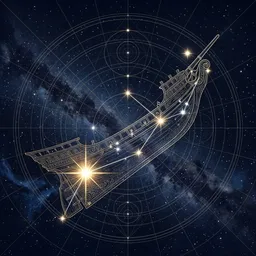 Miaplacidus | calm, tranquility | Carinaβ Car |
| 2/5 | Aspidiske | shield, aegis | Carinaι Car |
| 2/6 | Markeb | riding, traverse | Velaκ Vel |
| 2/7 | Aspidiske | shield, aegis | Carinaι Car |
| 2/8 | 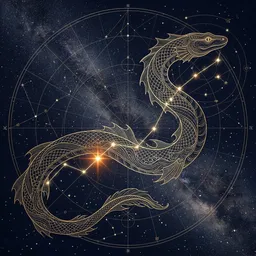 Alphard | independence, self-reliance | Hydraα Hya |
| 2/9 |  Alterf | watchful glance, gaze | Leoλ Leo |
| 2/10 | Ukdah | knot, fastening | Hydraι Hya |
| 2/11 | Subra | shoulder, bearing | Leoο Leo |
| 2/12 | Ukdah | knot, fastening | Hydraι Hya |
| 2/13 | Subra | shoulder, bearing | Leoο Leo |
| 2/14 | Zhang | extended net, expanse | Hydraυ1 Hya |
| 2/15 | Rasalas | lion's head, prospect | Leoμ Leo |
| 2/16 | Zhang | extended net, expanse | Hydraυ1 Hya |
| 2/17 | Rasalas | lion's head, prospect | Leoμ Leo |
| 2/18 | Regulus | majesty, leadership | Leoα Leo |
| 2/19 | Adhafera | tress, mane-lock | Leoζ Leo |
| 2/20 | Regulus | majesty, leadership | Leoα Leo |
| 2/21 | Adhafera | tress, mane-lock | Leoζ Leo |
| 2/22 | Algieba | mane, grandeur | Leoγ1 Leo |
| 2/23 | Tania Australis | second leap, bounce | Ursa Majorμ UMa |
| 2/24 | Algieba | mane, grandeur | Leoγ1 Leo |
| 2/25 | Tania Australis | second leap, bounce | Ursa Majorμ UMa |
| 2/26 | Tania Borealis | northern leap, nimbleness | Ursa Majorλ UMa |
| 2/27 |  Praecipua | principal, chief | Leo Minor46 LMi |
| 2/28 |  Alkes | chalice, libation | Craterα Crt |
| 2/29 | Praecipua | principal, chief | Leo Minor46 LMi |
The February night sky
At midnight in February, the eye goes straight to Regulus in Leo. The name means "little king" in Latin; it's the birth star for the 18th and 20th. Alphard in Hydra (the 8th) is an orange giant affectionately known in Japan as the "solitary star."
February also features far-southern stars: Miaplacidus in Carina (the 4th) never rises over Japan, and Suhail in Vela (the 3rd) barely clears the southern horizon. Visible or not, they shine under the same sky.
How to enjoy February birth stars
- Choose by star words: a card with the star's name and words for someone born in February.
- Find it at culmination: Regulus and Alphard are bright enough to spot easily in the midnight southern sky.
- Pair it with the birthday color: late-winter colors and star words make a seasonal gift.
- For gifts and cards: add a line of star lore to your Valentine's or Setsubun greetings.
FAQ
- What is the birth star for February?
- February's birth stars include Regulus, Miaplacidus, Alphard, and Suhail. Every day of February has its own star in our calendar.
- Does February 29 have a birth star?
- Yes — February 29 has its own star, Praecipua. Leap-day birthdays get a star too, and you can enjoy it every year.
- Can I actually see my birth star?
- Most are naked-eye stars, but some — like the stars of Carina and Vela — lie too far south to see from Japan. A stargazing app will show you where they are.
- What's the difference between a birth star and a constellation?
- A constellation is a region of the sky; a birth star is a single star within it. We define each day's birth star as the star that culminates around midnight on that date.
- How do you choose the birth stars?
- Our editors independently select, from the IAU-named stars, the one culminating around midnight on each date. It is not an official standard.
Our birth stars are an original editorial system compiled from IAU-named stars (rule: the star that culminates around local midnight on each date). Star words are examples; there is no official standard. Star name data: IAU Working Group on Star Names (CC BY 4.0).Editorial policy